



Washable vs Disposable Female Dog Diapers: Which Is Safer for Long-Term Use?

When your female dog is in heat or experiencing mild incontinence, choosing the right diaper becomes more than a convenience decision—it’s a health decision. Many Australian pet owners ask whether washable dog diapers or disposable options are safer over weeks or repeated cycles of use. The answer depends on moisture control, hygiene habits, breathability, and fit.
Veterinary guidance is clear: diapers are a management tool, not a medical treatment. Prolonged moisture exposure—regardless of diaper type—can increase infection risk if hygiene is poor (Paw Health Network, 2026). In this guide, we compare washable and disposable female dog diapers across five performance criteria: absorbency, skin health, cost, environmental impact, and use-case suitability. The goal is simple—help you make a safe, evidence-informed choice for long-term use.
Absorbency and Leak Protection: Performance Differences That Matter
For long-term use, absorbency consistency and leak control are critical. Both washable and disposable female dog diapers are designed to contain discharge or light urine leakage, but their performance characteristics differ.
Disposable diapers, such as Simple Solution Disposable Female Diapers, typically use superabsorbent polymer cores similar to baby nappies. These can lock away moisture quickly and are convenient for single-use situations. However, once saturated, they must be discarded. Extended wear beyond saturation increases skin exposure to trapped moisture.
Washable dog diapers, including products from Pet Parents® and Paw Legend, use layered microfiber or bamboo inserts. Absorbency depends on fabric quality and change frequency. High-quality washable options can handle repeated use during a 14–21 day heat discharge window, which is considered normal for many dogs (Cornell University College of Veterinary Medicine, 2026).
Key performance considerations:
- Change frequency (every few hours during active discharge)
- Secure tail-hole design to prevent leaks
- Adjustable waistband to reduce shifting
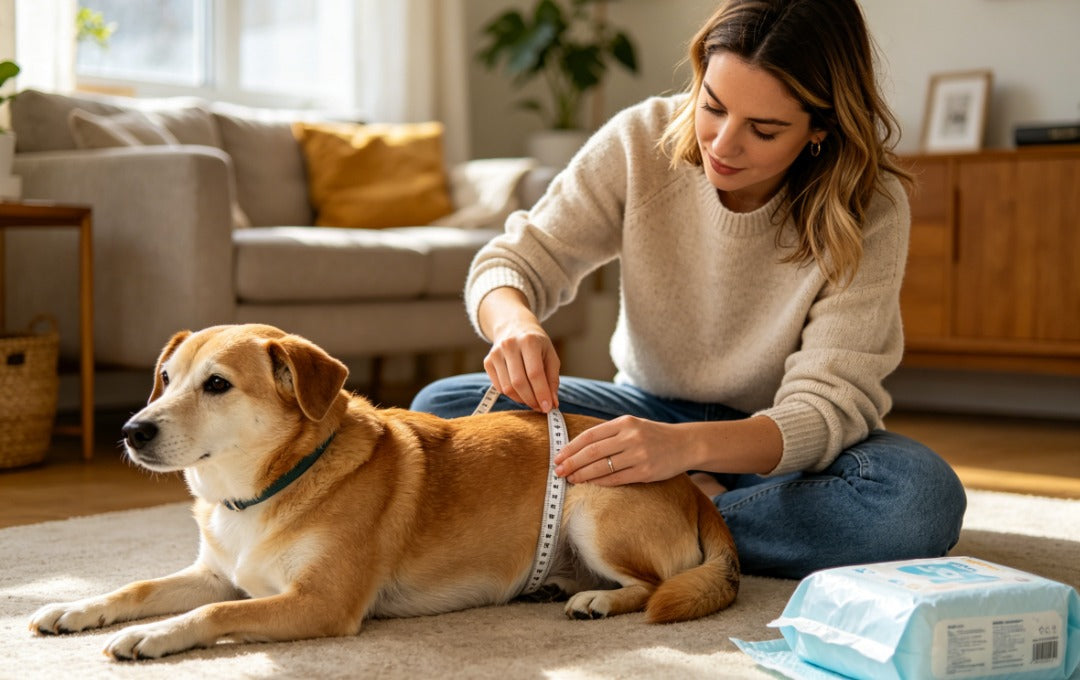
- Female-specific anatomical fit
For heat-cycle management, absorbency needs are typically moderate but prolonged across 2–3 weeks (Cornell University College of Veterinary Medicine, 2026). For mild incontinence, consistency of leakage may be more variable.
The most important takeaway: no diaper is “safe” if left on too long. Saturation time—not brand type—often determines skin risk.
Skin Health, Breathability, and UTI Risk
Long-term safety depends heavily on moisture control and airflow. Veterinary resources caution that urinary aids can increase the probability of skin and bladder infections when misused (Paw Health Network, 2026).
The mechanism is straightforward:
- Warm, moist environments promote bacterial growth.
- Friction from tight or poorly fitted diapers irritates skin.
- Prolonged contact between urine and vulvar tissue raises UTI risk.
Urinary incontinence is most often seen in middle-aged and older female dogs (Paw Health Network, 2026). That means long-term diaper use is more common in this group—making hygiene practices especially important.
Breathability differences:
- Disposable diapers often include plastic outer layers, which can reduce airflow.
- Washable diapers made from cotton blends or breathable mesh allow better ventilation when designed properly.
However, breathability only helps if:
- The diaper is changed frequently.
- The skin is cleaned and dried before reapplication.
- The fit is snug but not compressive.
According to AKC Expert Advice, diapers are intended as general management tools and do not replace veterinary diagnosis (AKC, 2026). If a dog shows frequent urination, odor, pain, or sudden behavior changes, a vet visit is required.
In practical terms, washable diapers may offer improved airflow when constructed with breathable fabrics. But infection risk is primarily driven by hygiene habits—not simply whether the diaper is reusable or disposable.
Cost Over 12 Months in Australia
For long-term use—such as repeated heat cycles or ongoing mild incontinence—cost accumulates quickly.
Let’s compare typical annual use scenarios for an Australian household:
| Scenario | Disposable Diapers | Washable Diapers |
|---|---|---|
| 2 heat cycles (approx. 21 days each) | 2–4 diapers per day × 42 days | 3–5 reusable diapers rotated |
| Mild daily leakage | 1–3 per day year-round | 4–6 reusable diapers rotated |
| Estimated 12-month cost | High recurring cost | Higher upfront, lower ongoing cost |
Disposable models require continuous repurchasing. Even at conservative use rates, this can mean hundreds to thousands of units per year.
Washable diapers involve:
- Initial purchase (typically 3–6 units)
- Ongoing washing (water and detergent costs)
- Insert replacement over time
For long-term management, washable diapers generally provide a better price-to-use ratio. This is especially relevant during heat cycles lasting 14–21 days per episode (Cornell University College of Veterinary Medicine, 2026).
Australian pet owners managing senior dog incontinence often find reusable systems more financially sustainable over 12 months.
Environmental Impact and Sustainability
Environmental impact becomes significant in long-term scenarios.
A single heat cycle may require dozens of disposable diapers. Over multiple years, this adds substantial landfill waste. Disposable pet diapers typically contain:
- Plastic backings
- Synthetic absorbent polymers
- Adhesives
These materials are not biodegradable.
Washable diapers reduce waste volume dramatically. Fabric-based designs can be reused across multiple cycles, particularly important for younger unspayed dogs experiencing recurring estrous periods.
From a sustainability perspective:
- Disposable = convenience + landfill accumulation
- Washable = lower waste + washing resource use
For eco-conscious Australian households, reusability often aligns better with long-term environmental goals.
Brands like Bella & Pal position washable female dog diapers as a breathable, reusable alternative designed specifically for heat management and mild incontinence—reducing single-use waste without compromising fit.
Environmental considerations do not override hygiene requirements, but they matter when evaluating multi-year use.
Which Option Is Safer by Use Case?
Safety depends on context. Here’s a structured breakdown:
Heat Cycles (Typically 14–21 Days)
Normal bloody discharge during proestrus may last 14–21 days (Cornell University College of Veterinary Medicine, 2026).
Best option:
- Washable diapers are practical for multi-week use.
- Requires 3–5 diaper rotation.
- Frequent changes and skin checks essential.
Why: Predictable timeline, moderate absorbency needs, repeated cycles.
Mild, Vet-Confirmed Incontinence
Urinary incontinence is more common in middle-aged and older female dogs (Paw Health Network, 2026).
Best option:
- Either washable or disposable.
- Hygiene frequency determines safety.
- Veterinary guidance required.
Why: Long-term management requires sustainable rotation and frequent monitoring.
Post-Surgical or Acute Medical Conditions
AKC emphasizes diapers are not substitutes for veterinary care (AKC, 2026).
Best option:
- Temporary disposable use may be appropriate short-term.
- Immediate vet evaluation for underlying cause.
Why: Medical oversight is primary; diaper is secondary support.
High-Mobility Outdoor Use
Disposable may offer convenience during travel or camping, where washing facilities are limited.
Indoor, Urban Australian Homes
Washable systems are often more practical due to access to washing machines and sustainability considerations.
Across all use cases, infection risk increases with prolonged moisture exposure—not with the diaper category alone (Paw Health Network, 2026). Safe use requires:
- Changing every 2–4 hours during active discharge
- Washing reusable diapers thoroughly
- Cleaning and fully drying skin before reapplication
- Monitoring for redness, swelling, odor, or discomfort
The safer option is the one paired with disciplined hygiene.
Frequently Asked Questions
1. Can long-term diaper use cause UTIs in female dogs?
Diapers themselves do not directly cause UTIs, but urinary aids can increase infection probability if moisture is trapped against the skin for prolonged periods (Paw Health Network, 2026). Frequent changes and skin cleaning significantly reduce risk.
2. How long is normal heat bleeding?
Bloody discharge during a heat cycle commonly lasts 14–21 days (Cornell University College of Veterinary Medicine, 2026). If discharge extends beyond expected timeframes or changes color or odor, consult your veterinarian.
3. Are washable diapers more breathable than disposable ones?
Many washable designs use cotton blends or breathable mesh, which may allow better airflow than plastic-backed disposables. However, breathability only benefits the dog if the diaper is changed frequently.
4. Should I see a vet before using diapers for incontinence?
Yes. Urinary incontinence is most common in middle-aged and older female dogs and can have underlying causes requiring treatment (Paw Health Network, 2026). Diapers manage symptoms but do not treat the condition.
5. How often should I change my dog’s diaper?
During active heat discharge or noticeable leakage, every 2–4 hours is recommended. The skin should be cleaned and dried at each change.
6. Are disposable diapers safer overnight?
Neither type is inherently safer overnight. Extended wear without change increases moisture exposure risk. If overnight use is necessary, ensure high absorbency and immediate morning removal.
Choosing between washable and disposable female dog diapers ultimately comes down to performance consistency, hygiene discipline, cost tolerance, and environmental values. Both can be safe when used correctly. Both can increase skin and infection risk when misused.
For repeated 14–21 day heat cycles, washable systems often provide better sustainability and cost efficiency (Cornell University College of Veterinary Medicine, 2026). For short-term or travel use, disposable options may offer convenience. Across all scenarios, veterinary guidance remains central, particularly for middle-aged or senior dogs experiencing urinary leakage (Paw Health Network, 2026; AKC, 2026).
If you’d like to evaluate a breathable, reusable option designed specifically for female anatomy and long-term rotation, you can Compare Bella & Pal to Other Leading Brands.


Leave a comment